
Home › Articles › Investment › How to Build a Real Estate Investment Portfolio on a Budget
How to Build a Real Estate Investment Portfolio on a Budget
By PropertyGeld Editorial Team
Published on PropertyGeld:
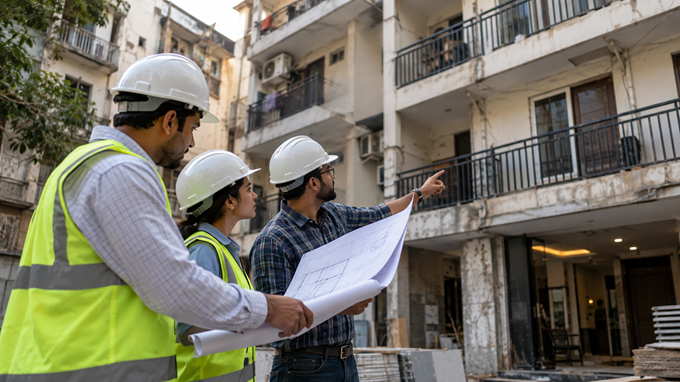
How to Build a Real Estate Investment Portfolio with a Limited Budget
Building a real estate investment portfolio does not always require a large amount of money. While buying multiple flats, houses, or commercial properties can be expensive, investors with limited budgets have other ways to gain exposure to the real estate market.
In India, beginners can explore options such as Real Estate Investment Trusts (REITs), carefully selected small properties, fractional real estate opportunities where legally available, and investments made gradually as their savings grow.
The key is to choose an approach that matches your financial situation, investment goals, and risk tolerance. Instead of trying to purchase several properties quickly, focus on making affordable decisions and managing risk.
So, how can you build a real estate investment portfolio with a limited budget?
This guide explains practical investment options, budgeting strategies, common mistakes, and steps to help you get started.
What Is a Real Estate Investment Portfolio?
A real estate investment portfolio is a collection of investments connected to property. It may include directly owned residential properties, commercial properties, land, REITs, or other permitted real estate investment products.
For example, an investor's portfolio might include a small rental apartment and an investment in a listed REIT. Another investor may begin with REIT units and gradually save toward purchasing a property directly.
The purpose of a portfolio is to organise investments around financial goals rather than depend entirely on one asset.
However, diversification does not guarantee profits. Property markets can be affected by economic conditions, interest rates, rental demand, and other factors.
1. Start by Understanding Your Budget
Before choosing a property or investment product, calculate how much money you can invest without putting your everyday finances at risk.
Your budget should account for:
Monthly household expenses
Existing loans and other debts
Emergency savings
Insurance and essential financial commitments
Short-term financial goals
The amount available for long-term investment
Avoid using all your savings for a property purchase. Direct real estate investments can involve unexpected repairs, legal costs, vacancy, and other expenses.
If your budget is limited, it may be more practical to begin with a smaller investment rather than take on a large home loan immediately.
Example of a Beginner's Budget
Suppose you have ₹2 lakh available for long-term investing.
You could compare several options before deciding how much to commit to real estate. For instance, you might keep some money accessible for emergencies and consider investing a smaller portion in a suitable listed REIT after researching its risks.
This is only an illustration, not a recommended allocation for everyone. Your emergency fund, debt obligations, income stability, and time horizon should determine how much you can safely invest.
2. Consider REITs for Lower-Cost Real Estate Exposure
Real Estate Investment Trusts, commonly known as REITs, provide a way to invest in income-generating real estate through securities rather than purchasing an entire property yourself.
Listed REITs in India can provide exposure to commercial real estate assets such as office buildings and other eligible properties.
Benefits of REITs
You can invest without buying an entire building or apartment.
Listed units can generally be bought and sold through a stock exchange during trading hours.
You may receive distributions from the REIT, depending on its income and distribution policy.
You can gain exposure to a portfolio of real estate assets.
You avoid many responsibilities associated with directly managing tenants and repairs.
Risks of REITs
REITs are not risk-free or equivalent to fixed deposits. Their market prices can fluctuate, distributions can change, and interest rates or commercial property conditions can affect performance.
Before investing, review the REIT's portfolio, financial reports, debt levels, distribution history, fees, and trading liquidity. Understand the applicable tax treatment as well.
For someone with a limited budget, a listed REIT may be a more accessible starting point than purchasing a physical property.
3. Save Toward Your First Direct Property Purchase
If your goal is to own a flat, shop, or plot directly, start by calculating the full amount you will need.
The purchase price is only one part of the cost. You may also need money for:
Stamp duty and registration
Legal verification
Brokerage, where applicable
Repairs or renovation
Initial maintenance payments
Home loan processing charges
An emergency reserve for unexpected expenses
For example, a property advertised at ₹20 lakh may require substantially more than ₹20 lakh once the applicable purchase expenses and initial work are included.
The exact amount depends on the state, property type, transaction, and financing arrangements.
Create a separate savings goal for your future property purchase. Regularly setting aside money can help you build the required capital without rushing into an unsuitable deal.
4. Research Smaller Properties and Affordable Locations
A limited budget may restrict your choice of property, but it does not remove the need for proper research.
Instead of focusing only on expensive city-centre properties, compare suitable options in established residential areas and locations with genuine employment, transport, and rental demand.
Potential options may include:
Smaller residential apartments
Compact units in established neighbourhoods
Properties in affordable cities
Small commercial units, where financially appropriate
Land in locations with clear legal status and realistic demand
Do not assume that a cheaper city or a developing locality will automatically provide better returns. Low prices can reflect weak demand, poor connectivity, oversupply, or legal and infrastructure issues.
Compare actual transactions, realistic rents, property condition, and resale prospects before making a decision.
5. Evaluate Rental Yield Before Buying
If you want your first property to generate rental income, calculate its potential yield before purchasing it.
Rental yield measures the annual rent relative to the property's price.
Formula:
Gross Rental Yield = (Annual Rental Income ÷ Property Purchase Price) × 100
For example, suppose a small property costs ₹25 lakh and generates ₹10,000 per month in rent.
Annual rent: ₹10,000 × 12 = ₹1,20,000
Property price: ₹25,00,000
Gross rental yield: 4.8% per year
This is the gross yield before maintenance, repairs, taxes, vacancy, and other expenses.
Calculate Net Rental Yield Too
Net rental yield gives a more realistic picture of the property's income potential.
Formula:
Net Rental Yield = (Annual Rental Income − Annual Operating Expenses) ÷ Total Property Cost × 100
If annual rent is ₹1.2 lakh and annual operating expenses are ₹25,000, the remaining income is ₹95,000 before financing costs and income tax.
Compare this figure with the total cost of purchasing and maintaining the property. If you use a home loan, also consider the interest costs and whether you can afford repayments during periods without a tenant.
6. Understand Home Loans Before Using Leverage
A home loan may help you purchase property without paying the entire price upfront. However, borrowing increases financial risk, especially when your investment budget is limited.
Before taking a loan, assess:
Your income stability
Existing loan repayments
The proposed EMI
Interest rate and loan tenure
Down payment requirements
Registration and other upfront expenses
Your ability to manage vacancies or unexpected costs
Do not assume that rent will always cover the EMI. Rental income may be interrupted, while loan repayments usually continue.
A property investment should remain affordable even if the property stays vacant for a period or your income temporarily decreases.
7. Avoid Putting All Your Money into One Property
When a large share of your savings is tied up in one property, your financial position becomes dependent on that asset and its local market.
If the property's value falls, rental demand weakens, or major repairs become necessary, you may face financial pressure.
Depending on your goals and risk tolerance, you could consider combining different investments over time, such as:
Listed REITs
Other diversified financial investments
Cash reserves for short-term needs
Direct property ownership when financially appropriate
Different investments have different risks. A REIT is not the same as owning a flat, and neither replaces an emergency fund.
Diversification should be based on your overall financial plan, not on a desire to own as many different assets as possible.
8. Research Fractional Real Estate Carefully
Fractional real estate platforms may allow multiple investors to participate in a property investment instead of one investor funding the entire asset.
However, the structure matters. Depending on the offering, investors may hold securities, units, or another legal interest rather than direct ownership of a specific portion of the property.
In India, certain fractional real estate arrangements may fall under specific regulatory frameworks. Investors should verify the platform, offering documents, legal structure, regulatory status, fees, exit terms, and risks before investing.
Important risks include:
Limited liquidity
Uncertain rental distributions
Difficulty selling an investment
Platform or operator risks
Property valuation uncertainty
Legal and regulatory complexity
Do not assume that every fractional property offering is regulated, safe, or suitable for small investors. Confirm the current regulatory position with the relevant official authorities and consult a qualified professional if needed.
9. Build Your Portfolio Gradually
You do not need to buy multiple properties in a short period to build a real estate investment portfolio.
A gradual approach can help you understand the market, improve your savings habits, and make better decisions as your financial position changes.
A practical progression might look like this:
Stage 1: Strengthen Your Finances
Build emergency savings, manage expensive debt, and determine how much money you can invest without compromising essential expenses.
Stage 2: Learn About Accessible Investments
Research listed REITs and other available investment options. Understand their costs, risks, and liquidity before committing money.
Stage 3: Set a Direct Property Goal
If owning property remains your objective, choose a realistic target price and calculate the required down payment, purchase expenses, and ongoing costs.
Stage 4: Research Before Purchasing
Compare similar properties, verify legal documents, estimate rental yield, and assess resale demand. Do not buy merely because a property appears cheap.
Stage 5: Review Your Portfolio Regularly
Track investment performance, expenses, rental income, and changes in your financial circumstances. Make additional investments only when they fit your updated plan.
This approach focuses on financial stability rather than rapid expansion.
10. Understand the Risks of a Limited-Budget Strategy
Investors with limited capital should be especially careful about expenses and unexpected losses.
Low Liquidity
Direct property can take time to sell. Do not invest money that you may need for an upcoming expense.
Unexpected Repairs
A property may require plumbing, electrical, waterproofing, or structural work. Maintain a reserve for repairs.
Vacancy and Rental Risk
A rental property may remain vacant, and tenants may delay payments. Estimate income conservatively.
Legal Problems
Ownership disputes, missing approvals, and other documentation problems can make a cheap property costly. Obtain appropriate legal checks.
Overborrowing
A large EMI can reduce your ability to save and invest elsewhere. Keep debt within a level you can manage comfortably.
Unrealistic Return Expectations
No investment guarantees a particular appreciation rate or rental income. Base decisions on evidence rather than promotional claims.
Common Mistakes to Avoid
Buying property without calculating the full purchase cost.
Using emergency savings for a down payment.
Taking a loan based only on the expected rent.
Ignoring the property's legal status.
Investing in a fractional offering without understanding the legal structure.
Assuming that lower-priced locations will appreciate faster.
Expecting guaranteed returns from REITs or direct property.
Purchasing multiple properties before the first investment is financially manageable.
Avoiding these mistakes can help you build a portfolio at a pace that matches your resources.
Frequently Asked Questions (FAQs)
1. Can I start real estate investing with ₹10,000?
It may be possible to gain real estate exposure through certain listed REIT investments, depending on the unit price and your brokerage arrangements. Direct property purchases generally require substantially more capital. Always research the investment, applicable charges, and risks before investing.
2. How can I invest in real estate without buying a house?
You can research listed REITs, which provide exposure to income-generating real estate through securities. Some other structures may also be available, but their legal form, liquidity, fees, and risks differ. Avoid investing in an offering you do not fully understand.
3. Is buying a small flat a good investment?
A small flat can be suitable if the purchase price, location, rental demand, legal status, and ownership costs make financial sense. Calculate net rental yield and assess resale prospects before buying.
4. Should beginners take a home loan for investment property?
A home loan can help finance a purchase, but it increases risk. Beginners should evaluate their income stability, down payment, EMI, emergency savings, and ability to manage the loan without relying entirely on rent.
5. Are REITs better than buying property directly?
Neither option is automatically better. REITs can provide more accessible exposure to real estate and are generally easier to trade than physical property, but their prices and distributions can fluctuate. Direct property offers greater control but involves higher costs, legal responsibilities, and lower liquidity.
6. How many properties should be in a real estate portfolio?
There is no ideal number. A portfolio should reflect your financial capacity, goals, and risk tolerance. One well-researched property may be more appropriate than several properties purchased with excessive debt.
7. How can I reduce risk when investing with a limited budget?
Maintain emergency savings, avoid excessive borrowing, compare realistic property values, verify documents, calculate net returns, and diversify thoughtfully. Never invest money you cannot afford to keep committed for the expected holding period.
Conclusion
Building a real estate investment portfolio with a limited budget is possible, but it requires patience, research, and careful financial planning.
You can explore accessible options such as listed REITs, save toward a direct property purchase, and gradually expand your investments as your financial position improves. Each option comes with different costs, risks, and liquidity constraints.
The most important step is to choose investments that fit your budget instead of stretching your finances to buy property prematurely.
Start small, protect your emergency savings, calculate the real costs, and focus on long-term financial stability rather than the number of properties you own.
Related articles
- How to Build a Real Estate Investment Portfolio on a Budget
- How to Assess Property Investment Risk Before Buying
- Property Valuation Methods: How Is House Market Value Estimated?
- How to Compare Rental Yields Across International Markets
- Buying Property in Europe: Guide for Indian Investors
- Dubai vs India Real Estate Investment: Key Differences