
Home › Articles › Faridabad – Noida – Ghaziabad Expressway: Complete Guide
Faridabad – Noida – Ghaziabad Expressway: Complete Guide
By PropertyGeld Editorial Team
Published on PropertyGeld:
In 2009, Rakesh Yadav invested in his first home in Neharpar, Faridabad, purchasing the property at ₹2,000 per sq ft. Despite owning the flat, he chose not to live there because his workplace—a motor workshop—is located in Ghaziabad. Daily commuting appeared time-consuming, and he also struggled to find tenants for the property.
Although aware of these challenges, budget limitations prevented him from buying a home closer to his workplace. Even the most affordable residential options in and around Ghaziabad were priced at nearly ₹3,000 per sq ft at that time. For a 1,000 sq ft flat, this would have increased his investment by ₹10–12 lakh.
Yadav explains that his purchase decision was driven by two long-term goals: settling in the property after retirement and benefiting from future price appreciation. He believed that delaying the purchase could make the property unaffordable later due to rising prices.
A Forward-Looking Investment
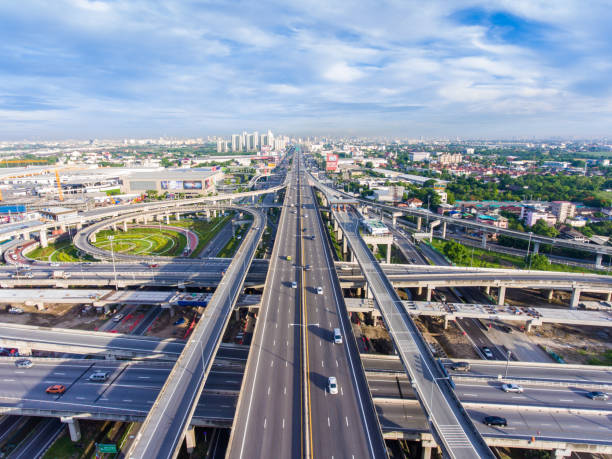
Real estate experts tracking the region suggest that Yadav’s decision may turn out to be highly beneficial. The key reason is the proposed Faridabad–Noida–Ghaziabad (FNG) Expressway, which is expected to significantly improve intercity connectivity across NCR.
The planned expressway spans around 56 km, with approximately 19.9 km passing through Noida–Greater Noida, eight km through Ghaziabad, and about 28.1 km in Faridabad. There are also discussions about extending it up to Sohna, which would increase its total length to nearly 75 km and further enhance real estate prospects along Sohna Road.
Boost for Connectivity and Real Estate
Developers see immense potential in the FNG Expressway even before its full completion. According to industry leaders, the corridor will directly connect NH-24 in Ghaziabad with NH-2, the highway linking Delhi and Agra. Two proposed bridges over the Yamuna River will further strengthen connectivity between Noida and Faridabad.
Improved road infrastructure is expected to unlock large land parcels along the corridor, encourage new residential developments, and make housing more affordable on city outskirts. Experts compare the impact of the FNG Expressway on Noida to how NH-8 transformed Gurugram, citing better connectivity, increased investments, and enhanced overall liveability.
Reducing Traffic Pressure
Currently, daily travel between major NCR cities like Faridabad, Noida, Ghaziabad, Gurugram, and Delhi is marked by heavy congestion and limited public transport options. Highways such as NH-8 frequently face traffic jams, with vehicle volumes crossing 1.5 lakh per day during peak periods.
Once operational, the FNG Expressway is expected to allow commuters to travel between Ghaziabad and Faridabad in about 30 minutes—without passing through Delhi. This is likely to ease traffic pressure on existing roads and offer a smoother daily commute for working professionals.
Outlook
The rapid development along the FNG corridor has already positioned nearby localities as emerging real estate hotspots. With major sections nearing completion, the expressway is expected to become operational soon, reshaping travel patterns and significantly boosting residential and commercial growth across Faridabad, Noida, and Ghaziabad.
Related articles
- Faridabad – Noida – Ghaziabad Expressway: Complete Guide
- Faridabad–Noida–Ghaziabad (FNG) Expressway Property Market: A Detailed Overview
- Faridabad–Noida–Ghaziabad (FNG) Expressway: A Growth Corridor for Real Estate Investment
- Top Rental Localities in Noida, Greater Noida & Ghaziabad
- Buying a 2BHK Apartment Under ₹50 Lakh on the Noida Expressway
- Noida–Greater Noida Expressway: Route, Connectivity & Real Estate Growth