
Home › Articles › Delhi–Mumbai Expressway: Route Map, Latest Construction Status & Completion Timeline
Delhi–Mumbai Expressway: Route Map, Latest Construction Status & Completion Timeline
By PropertyGeld Editorial Team
Published on PropertyGeld:
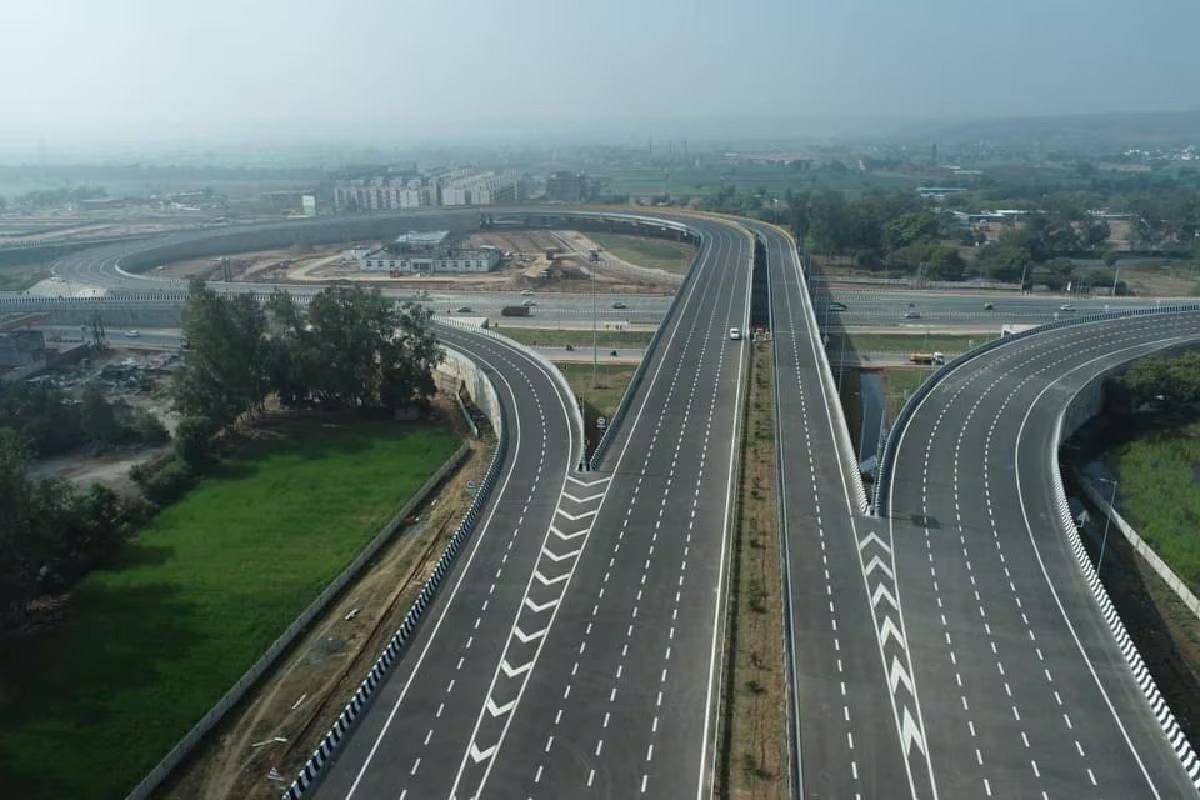
The Delhi–Mumbai Expressway is one of India’s most ambitious road infrastructure projects, designed to directly connect the national capital with the country’s financial capital. Once fully operational, this high-speed, access-controlled corridor will cut travel time between Delhi and Mumbai from nearly 24 hours to about 12 hours.
The foundation stone of this massive greenfield expressway was laid in March 2019, marking the beginning of India’s longest expressway project.
Overview of Delhi–Mumbai Expressway
The expressway spans approximately 1,380 km and is being developed by the National Highways Authority of India (NHAI) under the Public-Private Partnership (PPP) model.
Key objectives:
-
Faster movement between major economic regions
-
Reduced logistics and fuel costs
-
Decongestion of existing national highways
-
Promotion of industrial, logistics, and warehousing hubs
Due to construction challenges across multiple states, the project deadline has been revised, and full completion is now expected by 2027.
States Covered by the Expressway
The Delhi–Mumbai Expressway passes through six Indian states:
-
Delhi
-
Haryana
-
Rajasthan
-
Madhya Pradesh
-
Gujarat
-
Maharashtra
Major cities and regions along the route include Gurugram, Sohna, Jaipur, Kota, Ratlam, Vadodara, Surat, and Mumbai.
Delhi–Mumbai Expressway: Quick Facts
| Feature | Details |
|---|---|
| Total length | 1,380 km |
| Estimated cost | ₹1,00,000 crore |
| Lanes | 8 (expandable to 12) |
| Maximum speed | 120 km/h |
| Travel time | ~12 hours |
| Project status | Under construction |
| Expected inauguration | 2027 |
| Owner | NHAI |
| Entry points | DND Flyway (Delhi), Sohna (Haryana) |
| Exit points | Virar & JNPT (Maharashtra) |
Current Construction Status (Latest Updates)
As per recent progress reports:
-
Around 82% of construction work has been completed
-
774 km of the expressway is already operational
-
Nearly 90% work is complete on several pending sections
Section-wise progress:
1. Delhi–Vadodara (845 km)
-
About 650 km open to traffic
-
122 km section is nearly complete
-
Sohna–Dausa stretch opened in February 2023
-
Tunnel near Kota nearing completion, expected to reduce Gurugram–Vadodara travel time to 10–12 hours
2. Vadodara–Mumbai (Approx. 450 km)
-
124 km currently operational
-
Several stretches over 90% complete
-
Vadodara–Bharuch section opened in February 2024
Government Reviews & Official Statements
On December 12, 2025, Union Road Transport Minister Nitin Gadkari reviewed the project and stated that:
-
The expressway will significantly lower logistics costs
-
Road quality meets global standards
-
Plantation and public facilities are being developed along the corridor
-
Electric buses and trucks are planned to operate on this route
Major Connectivity Boosts
Bandikui–Jaipur Spur
-
Opened in July 2025
-
Reduces Delhi–Jaipur travel time to ~3 hours
-
Provides direct access without detouring via Dausa
Jewar Airport Connectivity
-
₹537 crore allocated for direct road links
-
31-km expressway spur via Ballabhgarh
-
Will connect Noida International Airport (Jewar) with Delhi–Mumbai Expressway
Toll Charges (Indicative)
| Vehicle Type | Toll (Max) |
|---|---|
| Private cars | ₹85 (Delhi–Gurgaon stretch) |
| Light vehicles | ₹500 |
| Commercial vehicles | ₹805 |
| Heavy vehicles | ₹1,685 |
⚠️ Two-wheelers, auto-rickshaws, animal carts, and slow vehicles are not permitted.
Advanced & Sustainable Features
Green & Smart Infrastructure
-
Solar-powered lighting
-
EV charging stations
-
Rainwater harvesting every 500 metres
-
Over 2 million trees planted with drip irrigation
Wildlife Protection
-
India’s first wildlife overpasses
-
Animal corridors near Ranthambore & Mukundra sanctuaries
-
Dedicated underpasses for large animals
Digital Highway
-
Optical fibre network for 5G rollout
-
Smart traffic monitoring
-
Emergency response systems
Logistics & Economic Impact
The expressway will support:
-
Multi-modal logistics parks (first in Indore)
-
Faster freight movement
-
Lower fuel and transportation costs
-
Growth of industrial clusters across central and western India
Real Estate & Investment Impact
Key benefits:
-
Faster access to Tier-2 & Tier-3 cities
-
Rise in land and property values
-
Growth of new residential and commercial zones
Emerging investment hotspots:
-
Sohna & Gurugram (Haryana)
-
Dausa & Kota (Rajasthan)
-
Ratlam & Mandsaur (Madhya Pradesh)
-
Vadodara & Surat (Gujarat)
-
Virar & Badlapur (Maharashtra)
Property prices along certain stretches have already recorded 60–70% appreciation over the past few years.
Why Delhi–Mumbai Expressway Is a Game Changer
-
Cuts Delhi–Mumbai travel time by half
-
Strengthens India’s logistics backbone
-
Encourages green & sustainable transport
-
Boosts regional economic development
-
Enhances inter-state connectivity at scale
Related articles
- Delhi–Mumbai Expressway: Route Map, Latest Construction Status & Completion Timeline
- Delhi Metro Rail Corporation Golden Line (Silver Line): Route, Stations & Latest Construction Update
- Delhi-Dausa Expressway: Route, Connectivity and Real Estate Growth Corridor
- National Highway 152D (Trans–Haryana Expressway): Route, Current Status & Real Estate Impact
- Delhi-Mumbai Expressway: Transforming Connectivity & Real Estate Growth
- Bangalore Metro Expansion: New Routes, Timelines & Real Estate Impact