
Home › Articles › Everything You Need to Know About the Eastern Peripheral Expressway (KGP Expressway)
Everything You Need to Know About the Eastern Peripheral Expressway (KGP Expressway)
By PropertyGeld Editorial Team
Published on PropertyGeld:
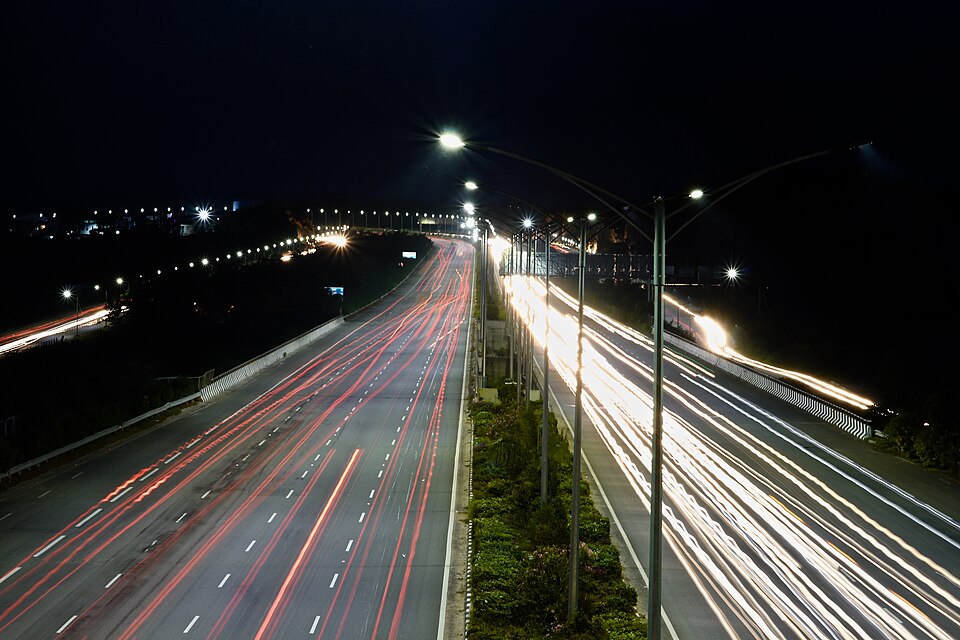
The Eastern Peripheral Expressway (EPE), also called the Kundli–Ghaziabad–Palwal Expressway (KGP) or National Expressway-2, is one of India’s most significant road infrastructure projects. Constructed at an estimated cost of around ₹11,000 crore, the expressway has improved connectivity around Delhi and contributed to the growth of surrounding real estate markets.
The project was inaugurated by Narendra Modi on May 27, 2018. The six-lane access-controlled highway stretches approximately 135 km and connects Kundli, Ghaziabad, and Palwal, forming part of the larger Delhi peripheral road network along with the Western Peripheral Expressway. Together, these expressways create a ring road around Delhi to divert non-Delhi traffic.
In November 2022, the expressway was acquired under the Toll-Operate-Transfer (TOT) model by Maple Highways, a company backed by the Canadian pension fund Caisse de dépôt et placement du Québec, from the National Highways Authority of India.
The expressway provides seamless, signal-free connectivity between major NCR cities such as Ghaziabad, Faridabad, Gautam Budh Nagar, and Palwal. Its primary objective is to reduce congestion and pollution in Delhi by diverting heavy vehicles away from the capital.
Background and Development of the Project
The idea for the Eastern Peripheral Expressway originated in 2006 after the Supreme Court of India directed the government to build a bypass road around Delhi. The goal was to divert vehicles that were passing through the city but had no destination within it.
The project received formal approval in July 2015 and was completed in about 500 days, significantly ahead of the original target of 910 days.
The expressway connects National Highway 1 and National Highway 2 on the eastern side of Delhi. Starting near Kundli in Haryana, it passes through several regions including Sonepat, Baghpat, Ghaziabad, Noida, and Faridabad before ending near Palwal.
Key Features of the Eastern Peripheral Expressway
The Eastern Peripheral Expressway includes several advanced and environmentally friendly features, making it one of India’s most modern highways.
Eco-friendly and Smart Infrastructure
-
The expressway is India’s first highway illuminated entirely with solar power.
-
It also includes a rainwater harvesting system along its route.
-
Multiple solar power plants along the expressway generate electricity for nearby facilities and the power grid.
Modern Facilities for Travelers
-
The highway includes amenities such as fuel stations, rest areas, restaurants, shops, and motels.
-
A digital art gallery and a grand toll plaza have been developed at the Kundli entry point.
-
Decorative structures include replicas of famous Indian monuments such as the Gateway of India, Sun Temple, and Qutub Minar, along with numerous fountains.
Advanced Road Infrastructure
The expressway includes a large number of engineering structures such as:
-
Four major bridges
-
46 minor bridges
-
Three flyovers
-
Seven interchanges
-
Over 200 underpasses
-
Eight road overbridges
The road is completely access-controlled, meaning vehicles can only enter or exit through designated interchanges.
Intelligent Traffic Management
The highway uses advanced technologies like:
-
Highway Traffic Management System (HTMS)
-
Video Incident Detection System (VIDS)
These systems help monitor traffic conditions and quickly respond to accidents or emergencies.
Timeline of the Eastern Peripheral Expressway
June 2005 – The Supreme Court directs the government to build a peripheral expressway around Delhi.
March 2006 – The project is designated as National Expressway-2.
November 2015 – Foundation stone laid by Prime Minister Narendra Modi.
May 2018 – The expressway is officially inaugurated.
December 2021 – An Intelligent Transport System is launched at Dasna by Nitin Gadkari, Union Minister for Road Transport and Highways.
November 2022 – The expressway is acquired by Maple Highways under the TOT model.
Exit Points on the Expressway
The Eastern Peripheral Expressway includes several entry and exit points that improve connectivity across NCR. Some of the major exits include:
-
Dadri
-
Duhai
-
Dasna
-
Baghpat
-
Atali-Chasna
-
Ghaziabad
-
Meerut
-
Noida
-
Moradabad
-
Faridabad
-
Greater Noida
These exits are mostly named after nearby villages or towns located along the route.
Toll Charges on the Eastern Peripheral Expressway
Toll rates on the expressway were revised on April 1, 2022. The National Highways Authority of India increased toll fees by approximately 10–50 percent.
For example:
-
The toll between Dasna and Duhai increased from ₹10 to ₹15.
-
The toll between Duhai and Mavi Kalan (Baghpat) rose from ₹50 to ₹55.
-
Light vehicles pay around ₹165 at Dasna and ₹180 at Duhai.
Impact of the Eastern Peripheral Expressway
The expressway plays a major role in improving regional connectivity and reducing congestion in Delhi. It is capable of handling nearly 200,000 vehicles daily, including heavy trucks and commercial transport vehicles.
By diverting vehicles that are not traveling to Delhi, the project helps:
-
Reduce traffic congestion
-
Lower pollution levels
-
Improve travel time between northern and southern states
Approximately 50,000 vehicles per day traveling toward states such as Punjab, Haryana, Uttar Pradesh, Uttarakhand, and Rajasthan can bypass Delhi through this route.
Security and Safety Measures
The expressway is equipped with several safety features for commuters:
-
CCTV cameras installed every two kilometres
-
Patrol vehicles positioned every 25 km
-
Emergency ambulance services along the route
-
Advanced monitoring systems for traffic incidents
These measures ensure quick response in case of accidents or emergencies.
Impact on Real Estate in NCR
The expressway has significantly boosted real estate development in nearby areas such as Palwal, Baghpat, and Kundli. Improved connectivity has made these regions more accessible for residents and investors.
Large land parcels available near the expressway have encouraged developers to launch residential and commercial projects. Retail and business developments are also increasing as urban expansion spreads outward from Delhi.
Future Connectivity with Jewar Airport
A new interchange is planned to connect the Eastern Peripheral Expressway with the Noida International Airport near Jewar. The connection will likely be developed near the Jaganpur–Afzalpur area of Greater Noida.
This link will connect the expressway with the Yamuna Expressway, enabling smoother travel between the two highways and significantly reducing travel time for commuters.
The improved transportation network will benefit residents, farmers, traders, and businesses across the NCR region by facilitating faster and more efficient movement of goods and people.