
Home › Articles › 3D-Printed Homes: A Game Changer for India’s Housing Sector
3D-Printed Homes: A Game Changer for India’s Housing Sector
By PropertyGeld Editorial Team
Published on PropertyGeld:
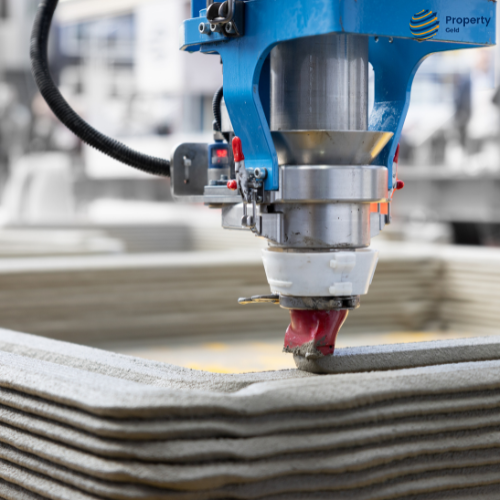
The concept of 3D-printed homes is gaining momentum in India, offering an innovative solution to housing challenges. With rapid urbanization, the demand for affordable and sustainable homes is at an all-time high. 3D printing technology is emerging as a cost-effective, time-saving, and environmentally friendly alternative to traditional construction methods.
What Are 3D-Printed Homes?
A 3D-printed home is built using additive manufacturing, where a structure is constructed layer by layer using a specially formulated material such as concrete. Unlike traditional methods that require bricks, steel, and timber, 3D printing eliminates the need for excessive manual labor and reduces material wastage. The entire process is digitally controlled, making it possible to create intricate designs that would otherwise be expensive and time-consuming with conventional techniques.
India’s First 3D-Printed House
India entered the 3D-printed housing revolution in 2021 when Tvasta Manufacturing Solutions, a Chennai-based startup founded by IIT Madras alumni, successfully constructed the country’s first 3D-printed house. The single-story structure, built within just five days, demonstrated how the technology could be leveraged to address India's housing deficit efficiently. This breakthrough project received widespread recognition and support from the government and real estate developers.
Cost Implications of 3D-Printed Homes
One of the most significant advantages of 3D printing technology in the construction sector is its cost efficiency. Traditional construction involves high labor costs, long timelines, and significant material wastage. In contrast, 3D printing minimizes waste, optimizes material usage, and requires less manpower, making the overall process more affordable.
Some key financial benefits of 3D-printed homes include:
- Lower labor costs: Since construction is automated, fewer workers are needed.
- Less material waste: The precise layering method ensures optimal material usage.
- Faster construction time: Reduced building time leads to lower overhead expenses.
- Use of locally available materials: Lowers transportation and import costs.
Advantages of 3D-Printed Homes
Beyond cost savings, 3D-printed homes offer several benefits, making them a viable alternative to traditional buildings:
1. Speed of Construction
- Traditional homes can take months or even years to build, whereas a 3D-printed home can be completed in just a few days or weeks.
- The automation process eliminates delays caused by weather, labor shortages, and supply chain issues.
2. Customization and Design Flexibility
- The digital nature of 3D printing allows for intricate and personalized architectural designs.
- Curved walls, unique facades, and optimized space utilization can be easily achieved.
- Clients can customize their homes without significantly increasing costs.
3. Sustainability and Reduced Environmental Impact
- 3D-printed homes are eco-friendly due to reduced material wastage.
- The technology supports sustainable building practices by using alternative, recycled, or locally sourced materials.
- These homes have a lower carbon footprint compared to conventional structures.
4. Strength and Durability
- 3D-printed concrete structures are as strong, if not stronger, than traditionally built homes.
- They can withstand extreme weather conditions, including earthquakes and heavy rainfall.
- Reinforced materials enhance durability and longevity.
5. Affordability for Mass Housing Projects
- 3D printing can be used to build affordable housing for lower-income groups.
- Governments and real estate developers can reduce housing shortages by constructing low-cost homes quickly and efficiently.
Challenges and Future of 3D-Printed Housing in India
While 3D-printed homes offer numerous advantages, certain challenges must be addressed before widespread adoption:
1. Regulatory Approvals
- Indian construction regulations and building codes do not yet have clear guidelines for 3D-printed structures.
- Government intervention and new policies are required to facilitate large-scale implementation.
2. Scalability and Awareness
- 3D-printed homes are still a new concept in India, and many developers are hesitant to adopt the technology.
- Increased awareness, along with pilot projects, could encourage more builders to explore this option.
3. Initial Investment Costs
- While 3D-printed homes are affordable in the long run, the initial cost of setting up 3D printing equipment can be high.
- Encouraging public-private partnerships and government subsidies could help bridge this financial gap.
4. Material Limitations
- The materials used in 3D construction need to be optimized for different climatic conditions in India.
- Research into alternative, cost-effective, and locally sourced printing materials is necessary.
The Road Ahead
Despite the challenges, India is making significant progress in adopting 3D-printed housing. With rising urbanization, increasing demand for affordable homes, and advancements in technology, 3D-printed homes could revolutionize the real estate sector.
Several real estate developers, construction firms, and government agencies are exploring 3D printing for housing projects, especially for:
- Affordable housing schemes
- Disaster-resistant homes
- Low-cost rental housing
- Sustainable and eco-friendly townships
Final Thoughts
3D-printed homes are no longer just a futuristic concept—they are rapidly becoming a real-world solution for modern housing needs. India is on the brink of a construction revolution, and with the right government support, industry adoption, and technological advancements, 3D-printed housing can play a vital role in solving the nation’s housing crisis.
With its potential to lower costs, accelerate construction, and promote sustainability, 3D printing could soon be a standard method of building homes across India.