
Home › Articles › Urban Housing and the Future of EV Charging Infrastructure in India
Urban Housing and the Future of EV Charging Infrastructure in India
By PropertyGeld Editorial Team
Published on PropertyGeld:
India is moving steadily towards becoming a more sustainable nation by encouraging the adoption of electric vehicles (EVs) across the country. As per reports, over 1.7 million EVs were sold in FY2024, reflecting a significant rise in acceptance. Currently, India hosts 25,202 functional public charging stations, with Karnataka leading the tally at 5,765, followed by Maharashtra (3,728) and Uttar Pradesh (1,989). The Indian government has laid out an ambitious goal of achieving 30% EV penetration by FY2030—a target that hinges on the rapid development and integration of efficient EV charging infrastructure nationwide.
Why Urban Housing Needs Smart EV Charging Infrastructure
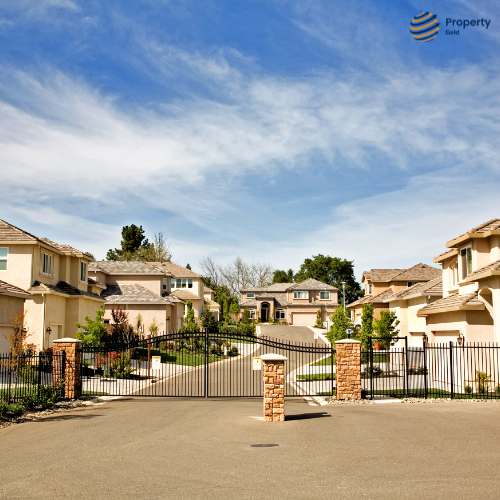
Modern housing societies, particularly in urban areas and gated communities, are well-positioned to lead India’s EV revolution. These densely populated residential clusters offer the ideal setting to install smart, user-friendly charging stations. With younger generations—especially GenX, millennials, and now Gen Z—driving the shift toward sustainable mobility, there's increasing demand for homes equipped with smart amenities, including EV charging points.
However, the current infrastructure falls short. Challenges like high setup costs, limited charging points, and logistical issues hinder EV adoption in residential zones. Statistics show that 51% of EV owners in urban societies have reverted to petrol or diesel vehicles, primarily due to inadequate charging solutions.
Moreover, with a projected need for over 45 million square feet of real estate for charging infrastructure over the next 5–6 years, the country must establish 3.9 million public and semi-public charging stations to maintain a healthy 1:20 EV-to-charger ratio. Presently, the ratio is a worrying 1:135.
To overcome these limitations, housing communities need to integrate smart EV chargers that support features like remote access, real-time monitoring, user verification, and scheduled charging. Such upgrades can offer convenience at the doorstep, encouraging long-term EV use.
Market Outlook and Growth
India’s EV charging infrastructure market is on track for exponential growth, expected to expand at a CAGR of 46.5% by 2030. To meet future demand, 3 million charging units must be sold annually. In response, real estate developers and EV tech companies have started investing in solutions specifically designed for residential integration—especially in gated communities and apartment complexes.
Government Support and Policy Framework
Multiple government initiatives have helped accelerate this transformation. Key programs like the National Mission on Transformative Mobility and Battery Storage, FAME I & II, and now the PM E-Drive scheme, have all worked towards building a strong EV ecosystem. The PM E-Drive scheme alone aims to deploy 48,400 fast chargers, focusing particularly on electric 2-wheelers and 3-wheelers.
In parallel, states like Delhi, Maharashtra, Karnataka, Kerala, and Andhra Pradesh have introduced tailored policies and incentives for private developers setting up charging stations in residential complexes. Battery swapping policies are also being piloted to further streamline EV use, particularly in urban settings.
Conclusion
As India strides towards electrification, urban housing projects will play a key role in bridging the gap between EV ownership and accessibility. Integrating intelligent charging solutions within housing societies will not only benefit residents but also contribute to India’s broader sustainability goals. Developers who embrace this shift by offering smart, future-ready infrastructure stand to gain significantly—meeting evolving homebuyer expectations while contributing to a cleaner, greener future.