
Home › Articles › Urban Extension Road (UER) II: Opening New Real Estate Avenues in Delhi NCR
Urban Extension Road (UER) II: Opening New Real Estate Avenues in Delhi NCR
By PropertyGeld Editorial Team
Published on PropertyGeld:
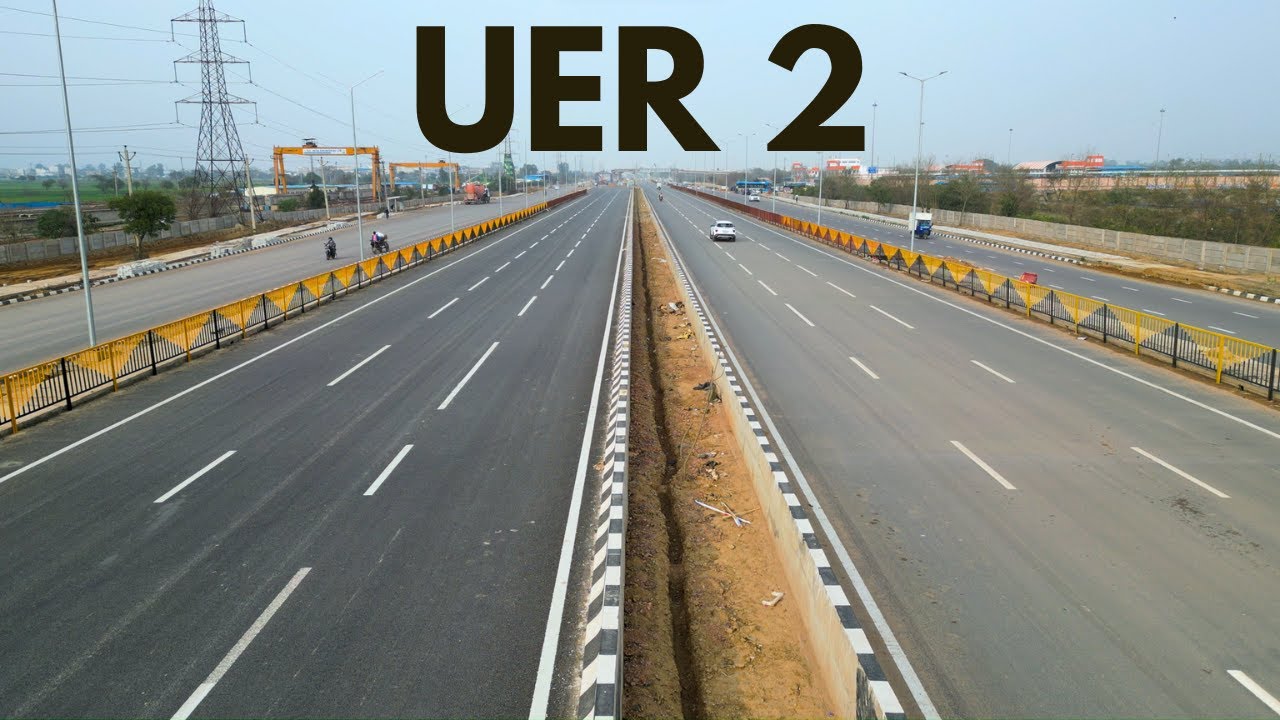
The Urban Extension Road II (UER-II) is a landmark infrastructure project aimed at strengthening Delhi’s road network and easing congestion across the National Capital Region (NCR). Conceived by the Delhi Development Authority (DDA), this expressway starts at National Highway 44 in Alipur and travels through key locations such as Bawana, Mundka, Najafgarh and Dwarka before merging with National Highway 48 near Mahipalpur.
Initially proposed in 2000 under the Master Plan of Delhi 2021, UER-II was envisioned as the city’s third ring road after the Inner and Outer Ring Roads. Over time, the scope of the project was expanded to improve regional connectivity and support urban growth in Delhi and neighbouring states.
The primary objective of UER-II is to decongest existing arterial roads, shorten travel durations, and encourage residential, commercial and industrial development along its corridor.
Urban Extension Road II: Major Highlights
The project is being executed by the National Highways Authority of India (NHAI) under the Ministry of Road Transport and Highways, with coordination between the governments of Delhi, Haryana and Uttar Pradesh.
Key specifications of UER-II include:
-
Total length: 75.71 km
-
Lanes: 6
-
Project status: Partially operational; nearing completion
-
Executing authority: NHAI
-
Estimated cost: Rs 7,700 crore
The expressway has been designed as an access-controlled corridor featuring elevated flyovers, service roads for local traffic, and limited entry and exit points to ensure smoother vehicular movement.
A notable aspect of UER-II is its eco-friendly construction. Nearly two million tonnes of waste from the Ghazipur landfill have been utilised, earning it the distinction of a ‘green road’. Additionally, the project is among India’s first planned e-highways, with provisions for electric buses, cars and freight vehicles.
Urban Extension Road II: Route Overview
Of the total stretch, approximately 54.21 km lies within Delhi, while the remaining 21.50 km extends into Haryana. The expressway forms a semi-circular arc along western Delhi, connecting Alipur, Bawana Industrial Area, Rohini, Mundka, Bakkarwala, Najafgarh and Dwarka before reaching NH-48 near Mahipalpur.
Two four-lane spur roads are also part of the project:
-
A spur from Bawana towards Sonipat and Jind
-
Another from Najafgarh to Bahadurgarh
UER-II integrates seamlessly with major infrastructure projects such as the Dwarka Expressway, Western Peripheral Expressway (Kundli–Manesar–Palwal), Eastern Peripheral Expressway, and the IGI Airport tunnel. It also links several national highways, significantly improving access to north, west and northwest Delhi, Gurgaon and the airport.
Phased Development of UER-II
Phase 1
Construction has been divided into five packages. The first three packages cover the stretch from NH-1 through Karala, Kanjhawala, Nangloi and Najafgarh, terminating near Dwarka Sector 24. The remaining packages focus on the Haryana spurs connecting Bawana to Barwasni Bypass and Dichaun Kalan to Bahadurgarh Bypass.
Phase 2
The next phase aims to complete missing links and integrate the expressway with existing urban roads. This includes development of the Rangpuri Bypass, widening Nelson Mandela Marg, and construction of elevated corridors along the Delhi–Faridabad route.
Impact on Regional Connectivity
UER-II is expected to significantly reduce traffic pressure on Delhi’s Inner and Outer Ring Roads by providing an alternative high-speed corridor. Key connectivity benefits include:
-
Reduced travel time: Commute between Kundli and IGI Airport is expected to drop from nearly two hours to around 20–40 minutes.
-
Improved access to economic hubs: Better connectivity to industrial zones such as Bawana and Mundka, and commercial areas like Dwarka and Najafgarh.
-
Enhanced inter-state travel: Spur roads strengthen links between Delhi and Haryana, improving trade and daily commuting.
-
Integration with national corridors: The expressway will connect with upcoming routes such as the Delhi–Katra Expressway and Delhi–Dehradun Expressway, enabling seamless long-distance travel.
Importance of UER-II for Real Estate Growth
With enhanced accessibility and reduced commute times, UER-II is emerging as a major catalyst for real estate development. The corridor is expected to boost demand for housing, commercial spaces and logistics hubs, particularly in areas that were previously underdeveloped.
Established localities such as Dwarka, Rohini and Najafgarh are likely to see steady appreciation in property values. At the same time, emerging zones like Kanjhawala, Bawana and Narela are gaining attention from investors due to their growth potential and relatively affordable pricing.
Promising Areas to Invest Near UER-II
New Gurgaon
New Gurgaon has rapidly evolved into a premium residential destination, supported by strong connectivity through the Dwarka Expressway and now UER-II. Its proximity to employment hubs like Cyber City, Udyog Vihar and Manesar makes it attractive for both end-users and investors. The region hosts several high-quality residential projects by reputed developers, offering better value compared to central Gurgaon.
Dwarka
Dwarka has witnessed significant urban transformation driven by metro expansion, proximity to IGI Airport, diplomatic enclaves and large-scale infrastructure projects. Well-planned sectors, green spaces and commercial development have contributed to rising property demand. UER-II further strengthens Dwarka’s position as a key real estate hub in Delhi.
Rohini
One of Delhi’s oldest planned sub-cities, Rohini benefits from established social infrastructure and multi-modal connectivity. UER-II is expected to improve access to Gurgaon and the airport, enhancing demand for residential properties. Newer sectors near the expressway are emerging as attractive investment options.
Bahadurgarh
Often referred to as the gateway to Haryana, Bahadurgarh is gaining momentum due to improved road connectivity and upcoming transit projects. UER-II has significantly reduced travel time to Delhi and IGI Airport, encouraging residential and commercial growth. Competitive property prices continue to attract budget-conscious buyers and long-term investors.
Urban Extension Road II: Timeline and Recent Developments
-
2000: Project proposed under the NCR Transport Plan
-
2018: NHAI took over Phase 1 execution
-
2021: Tree transplantation approvals granted; construction contracts awarded
-
2024: Key sections inaugurated; progress reviewed by authorities
-
2025: Expressway partially operational with final construction works underway
Conclusion
Urban Extension Road II is set to redefine mobility and urban growth in Delhi NCR. By improving connectivity, reducing congestion and opening new development corridors, the expressway is playing a pivotal role in reshaping the region’s real estate landscape. For homebuyers and investors alike, areas along UER-II present strong long-term growth opportunities backed by robust infrastructure.
Related articles
- Urban Extension Road (UER) II: Opening New Real Estate Avenues in Delhi NCR
- Delhi’s Urban Extension Road 2 (UER II) to Reduce Airport Travel Time to 20 Minutes
- Urban Extension Road II (UER-II): Transforming Connectivity and Real Estate in Delhi NCR
- Emaar Urban Oasis Sector 62 Gurgaon: Luxury Living on Golf Course Extension Road
- DLF The Arbour Sector 63 Gurgaon: Ultra-Luxury Living on Golf Course Extension Road
- Outer Ring Road Delhi: Overview