
Home › Articles › Understanding Home Foundations: 10 Types Every Homeowner Should Know
Understanding Home Foundations: 10 Types Every Homeowner Should Know
By PropertyGeld Editorial Team
Published on PropertyGeld:
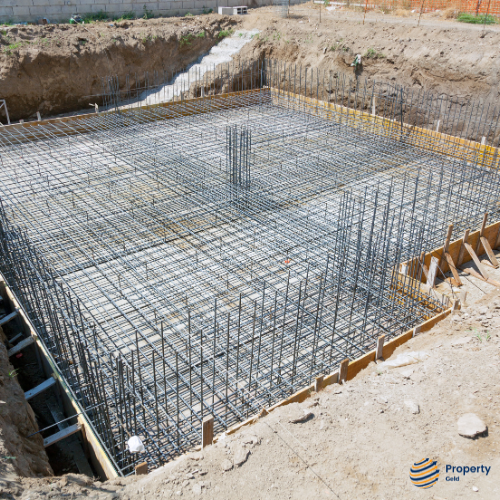
The foundation of a home is the most essential structural element — literally the base on which your house stands. It supports the entire weight of the building, distributes it evenly to the ground, and helps prevent issues like cracking, settling, or collapse.
Choosing the right type of foundation is vital for the longevity and stability of your home. This decision isn’t random — it’s based on factors like soil type, local climate, site topography, and your home’s design.
At PropertyGeld, we break down the 10 most common types of home foundations, along with their benefits, limitations, and where they are best suited.
1. Slab-on-Grade Foundation
This is one of the most commonly used foundation types in India, especially in warmer regions. It involves pouring a thick concrete slab directly on the ground, which also serves as the floor.
-
Pros: Affordable, quick to build, minimal excavation, ideal for warm and stable regions.
-
Cons: Not ideal for frost-prone areas, difficult to access plumbing, susceptible to cracks on weak soil.
2. T-Shaped (Traditional Footing) Foundation
Commonly used in colder regions, this involves laying footings below the frost line and building foundation walls on top.
-
Pros: Offers strength and stability, works for various soils, allows for basements or crawl spaces.
-
Cons: Higher construction cost, more excavation, can be impacted by frost if not properly designed.
3. Shaft (Drilled Caisson) Foundation
This deep foundation involves drilling down to stable soil or bedrock and pouring reinforced concrete into the shaft.
-
Pros: Ideal for heavy loads and poor surface soils.
-
Cons: Expensive, requires expert equipment and skilled labor.
4. Crawl Space Foundation
Creates a small space between the ground and the first floor, making utility access easy.
-
Pros: Better access to plumbing and wiring, improved ventilation, reduces moisture risk.
-
Cons: Requires proper pest control and ventilation, more excavation than slab-on-grade.
5. Basement Foundation
This extends the foundation deeper to create usable basement space for storage or living.
-
Pros: Adds significant space, protects from extreme weather, increases property value.
-
Cons: Most expensive option, prone to water seepage if not well-sealed.
6. Pier and Beam Foundation
This uses vertical piers to support horizontal beams under the home — useful on uneven terrain.
-
Pros: Works well on slopes, less soil disturbance, improves ventilation, reduces flood risk.
-
Cons: Needs proper design and pest-proofing, slightly costlier than slabs.
7. Post-Frame Foundation
Typically used for outbuildings, this method sets treated posts directly into the ground.
-
Pros: Budget-friendly, quick installation, minimal site prep.
-
Cons: Not suitable for heavy or multi-story buildings, design flexibility is limited.
8. Mat Slab (Raft) Foundation
A thick concrete slab spans the whole building footprint, distributing weight evenly in poor soil conditions.
-
Pros: Prevents settlement, great for weak soils.
-
Cons: Expensive, requires heavy reinforcement and complex engineering.
9. Rubble Trench Foundation
A sustainable method using gravel or crushed stone in a trench instead of concrete.
-
Pros: Eco-friendly, excellent drainage, cost-effective for light structures.
-
Cons: Not fit for heavy buildings, careful design and compaction are essential.
10. Insulated Concrete Form (ICF) Foundation
These are formed by stacking interlocking foam blocks and filling them with concrete, combining strength and insulation.
-
Pros: Energy-efficient, durable, quick construction.
-
Cons: Higher cost, requires skilled labor, limited modification options post-build.
Foundation Choices in Indian Climates
Hot Regions (e.g., Rajasthan, Gujarat)
The challenge here is to reduce heat transfer and manage dry, loose soil. Slab-on-grade foundations are popular, but require proper insulation and soil compaction.
Cold Regions (e.g., Himalayan States)
Frost heave and sloping land are major concerns. T-shaped, stepped, or pier and beam foundations are ideal, as they can handle frost and uneven terrain.
Rainy Areas (e.g., Coastal & Northeast India)
High rainfall and waterlogging demand moisture-resistant options. Deep foundations (like piles or caissons), raft foundations, or raised crawl space foundations are typically used to keep structures stable and dry.
Pros & Cons of Deep Foundations in Indian Conditions
Advantages:
-
Ideal for weak soils and waterlogged regions.
-
Stable in monsoon-prone areas with seasonal soil changes.
-
Suitable for heavy buildings and high-rise construction.
Disadvantages:
-
High cost and complex construction process.
-
Needs detailed soil analysis and specialized machinery.
-
Groundwater can create additional engineering challenges.
Final Thoughts from PropertyGeld
Choosing the right foundation for your home is a decision best made with the help of professionals. Soil tests, site surveys, and structural assessments are key to making sure your home stands strong for generations. At PropertyGeld, we encourage future homeowners to plan smart, stay informed, and build strong from the ground up.