
Home › Articles › Understanding FSI (Floor Space Index) in Ahmedabad
Understanding FSI (Floor Space Index) in Ahmedabad
By PropertyGeld Editorial Team
Published on PropertyGeld:
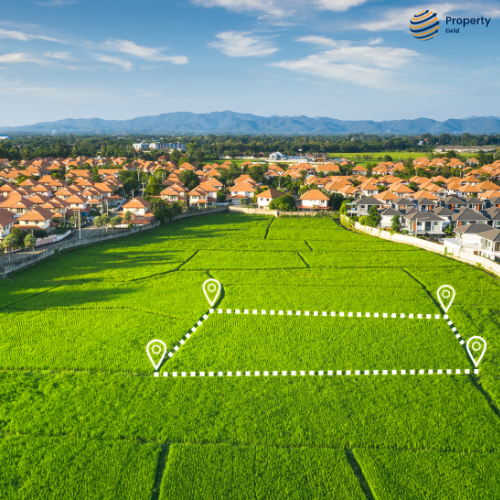
The Floor Space Index (FSI), also known as Floor Area Ratio (FAR), plays a crucial role in determining the extent of construction permissible on a plot of land. It is the ratio of the total built-up area to the total plot area and is regulated by the Ahmedabad Urban Development Authority (AUDA) and Ahmedabad Municipal Corporation (AMC). FSI guidelines vary based on zoning regulations, road width, and building usage.
What is FSI and Why is it Important?
FSI dictates the amount of construction that can be carried out on a plot. A higher FSI means that more floors or built-up area can be developed on the same land parcel. The regulation of FSI ensures planned urban development, efficient land usage, and proper infrastructure planning.
The formula for calculating FSI is:
FSI=Total Built-Up AreaPlot AreaFSI = \frac{\text{Total Built-Up Area}}{\text{Plot Area}}
For example, if a plot of 2,000 square feet has an FSI of 1.8, the total permissible built-up area will be:
2,000×1.8=3,600 square feet2,000 \times 1.8 = 3,600 \text{ square feet}
FSI Regulations in Ahmedabad
Ahmedabad's FSI limits are set based on different zones, with separate rules for residential and commercial buildings. The general FSI allocation for residential zones is:
- R1 Zone (High-Density Residential Zone): 1.8
- R2 Zone (Low-Density Residential Zone): 1.2
Developers can utilize additional FSI, known as Premium FSI, by paying extra charges to the local authorities. The availability of additional FSI depends on the width of the adjacent road.
Premium FSI in Ahmedabad
Premium FSI allows property developers to build beyond the base FSI limit by paying a government-prescribed fee. The allocation is as follows:
- For roads 30-40 feet wide: 20% extra FSI
- For roads 40-60 feet wide: 30% extra FSI
- For roads wider than 60 feet: 40% extra FSI
For example, if a 2,000 sq. ft. plot is located on a 35-foot-wide road, it qualifies for 20% extra FSI. In an R1 zone (FSI 1.8), the calculation will be:
- Base Built-up Area: 2,000 × 1.8 = 3,600 sq. ft.
- Additional (20% of 3,600 sq. ft.): 720 sq. ft.
- Total Permissible Built-up Area: 4,320 sq. ft.
This additional FSI helps developers maximize space utilization and profitability.
Impact of FSI on Property Development
- Higher Returns on Investment: Builders and developers can construct additional floors or units, increasing property value.
- Planned Urban Growth: Controlled FSI ensures optimal land utilization and prevents overcrowding.
- Revenue Generation for AMC: Ahmedabad Municipal Corporation earns revenue from selling additional FSI, funding urban development projects.
According to recent reports, over 100 builders in Ahmedabad have collectively purchased ₹400 crore worth of chargeable FSI, opting for installment-based payments over two years. This highlights the growing demand for FSI among real estate developers.
Key Takeaways for Property Buyers & Developers
- FSI regulations impact construction planning, pricing, and feasibility.
- Premium FSI allows additional construction but requires additional payments.
- Higher FSI zones are more suitable for multi-story apartments and commercial developments.
- Developers should consult AUDA and AMC guidelines before planning construction projects.
By understanding and leveraging FSI rules effectively, real estate investors and developers in Ahmedabad can optimize their projects for maximum efficiency and profitability.