
Home › Articles › Stamp Duty and Registration Charges on Property Gift Deed in India
Stamp Duty and Registration Charges on Property Gift Deed in India
By PropertyGeld Editorial Team
Published on PropertyGeld:
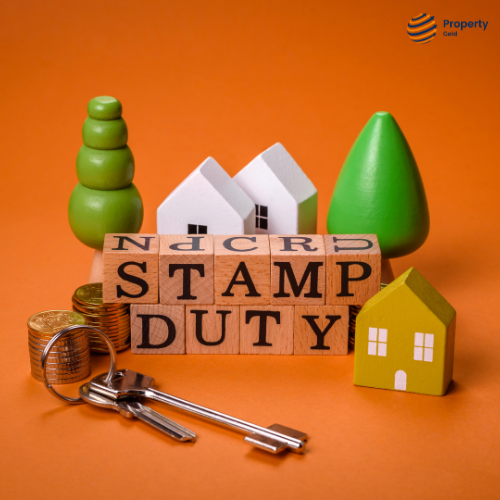
When transferring property ownership in India, the buyer is required to pay stamp duty and registration fees to officially register the change. The same rule applies to property gifted to another person. Depending on the state, individuals gifting immovable property must pay stamp duty and registration fees ranging from 2% to 7% to legally register the gift deed.
Understanding a Gift Deed
A gift deed is a legally binding document that facilitates the transfer of property ownership from the donor (giver) to the donee (receiver) under Section 122 of the Transfer of Property Act, 1882. Unlike a sale transaction, a gift deed does not involve any monetary exchange.
Key Features of a Gift Deed
- No monetary consideration: Unlike a sale deed, a gift deed does not involve financial transactions.
- Mutual consent: The donor must willingly gift the property, and the donee must accept it within the donor’s lifetime; otherwise, the gift becomes void.
- Existing immovable property: The property being gifted must exist at the time of execution.
- Irrevocability: Once a gift deed is executed and accepted, it is generally irreversible, except under exceptional circumstances like fraud or coercion, as stated in Section 126 of the Transfer of Property Act.
Stamp Duty Rebates for Blood Relatives
While most states impose a standard stamp duty for registering a gift deed, some states provide full or partial exemptions when gifting property to blood relatives. This initiative benefits middle-class families and farmers by reducing the financial burden of property transfers within families.
Who Qualifies as a Blood Relative?
The Income Tax Act of India defines blood relatives for tax exemption purposes, including:
- Spouse
- Siblings
- Siblings of the spouse
- Siblings of parents
- Lineal ascendants and descendants
- Lineal ascendants and descendants of the spouse
- Spouses of the above-mentioned individuals
Gift Deed vs. Will
- A gift deed transfers ownership immediately and is generally irreversible.
- A will only takes effect after the testator’s demise and can be modified multiple times before their death.
Stamp Duty & Registration Charges for Property Transfer
As per the Indian Registration Act, any immovable property valued over ₹100 must be legally registered upon ownership transfer. Stamp duty and registration charges vary by state and depend on whether the recipient is a blood relative or not. The donor is responsible for these payments.
Factors Affecting Stamp Duty on Gift Deeds
- State laws: Stamp duty varies by location.
- Payment timing: The entire amount must be paid at registration.
- Property type: New properties usually attract higher stamp duties than older ones.
- Owner’s age: Senior citizens often enjoy lower stamp duties.
- Gender: Some states offer lower stamp duty rates for women.
State-Wise Stamp Duty & Registration Fees for Gift Deeds in 2025
| State | Stamp Duty | Registration Fee |
|---|---|---|
| Uttar Pradesh | ₹5,000 for blood relatives + ₹1,000 processing fee | 1% |
| Haryana | 5% | 1% |
| Delhi | 4% | 1% |
| Maharashtra | ₹200 for blood relatives | 1% |
| Gujarat | 3.5% | 1% |
| Rajasthan | 6% (rebates available for certain relations) | 1% |
| Madhya Pradesh | 2.5% (1% for family members) | 1% |
| Punjab | No stamp duty for blood relatives | 1% |
| Himachal Pradesh | 5-6% | 1% |
| Telangana | 0.5% (min ₹1,000, max ₹10,000) | 1% |
Special State Provisions
- Maharashtra: A nominal ₹200 stamp duty applies to gifts made to spouses, children, grandchildren, or daughters-in-law after a son’s death.
- Madhya Pradesh: The standard 5% stamp duty reduces to 1% for transfers within families.
- Uttar Pradesh: A fixed ₹5,000 stamp duty applies for property transfer among blood relatives, with an additional ₹1,000 processing fee.
- Punjab & Haryana: Since 2014, these states have waived stamp duty for gift deeds within families.
- Uttarakhand: A reduced 1% stamp duty applies to family transfers, compared to the standard 5%.
Registration Fees for Gift Deed Transfers Among Blood Relatives
Unlike sale deeds, there is no gender-based relaxation in registration fees for gift deeds. The charges remain uniform for all individuals, whether they are related or not.
Steps to Gift Property to a Blood Relative
- Verify Eligibility: Ensure both donor and donee meet legal requirements.
- Draft the Gift Deed: Include essential details such as donor and donee names, property specifications, etc.
- Register the Gift Deed: The document must be signed in the presence of two witnesses and registered at the Sub-Registrar’s Office (SRO).
- Donee’s Acceptance: The donee must accept the gift within the donor’s lifetime for it to be legally valid.
How to Pay Stamp Duty on a Gift Deed (2025)
- Online: Visit the IGRS portal of the respective state, select “Gift Deed on Immovable Property”, and make the payment.
- Offline: Pay directly at the Sub-Registrar’s Office (SRO) where the property is registered.
Challenges in Gift Deed Registration
- Pending legal disputes on the property.
- Errors or incomplete information in the deed.
- Non-compliance with state-specific regulations.
Tax Implications of Gifting Property
- Income Tax on Gifts: Gifts received from blood relatives, marriage gifts, and inherited properties are tax-free.
- Capital Gains Tax:
- If the property was acquired before July 23, 2024, the donee can choose between 20% with indexation benefits or 12.5% without indexation.
- If acquired after July 23, 2024, only 12.5% without indexation applies.
- Tax on Rental Income: If a property is gifted to a spouse, no tax is levied on the transfer. However, any income (e.g., rent) generated from the property is taxable.
- Property Tax: The donee, as the new owner, is responsible for paying annual property tax. A penalty of 2% per defaulted period applies for non-payment.
By understanding these regulations, property owners can ensure smooth and legally compliant gift transfers to their loved ones.
Related articles
- Stamp Duty and Registration Charges on Property Gift Deed in India
- Stamp Duty and Registration Charges in Faridabad, Haryana
- Stamp Duty and Registration Charges in West Bengal (2025)
- Stamp Duty & Registration Charges in Punjab – Complete Guide
- Gift Deed Stamp Duty in Maharashtra: A Comprehensive Guide for Property Owners
- Stamp Duty and Registration Charges in Gurgaon in 2024