
Home › Articles › Hyderabad Regional Ring Road (RRR): Transforming Connectivity and Real Estate Growth
Hyderabad Regional Ring Road (RRR): Transforming Connectivity and Real Estate Growth
By PropertyGeld Editorial Team
Published on PropertyGeld:
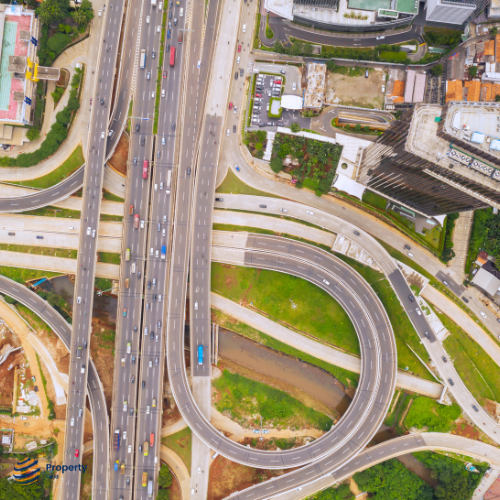
The Regional Ring Road (RRR) in Hyderabad is a major infrastructure initiative designed to enhance regional connectivity, decongest the city, and support economic growth. This ambitious project, being developed under the Bharatmala Pariyojana Phase 1 by the National Highways Authority of India (NHAI), is expected to play a pivotal role in Hyderabad's urban expansion.
With an estimated investment of Rs 17,000 crore, the 340-kilometer-long four-lane expressway will encircle Hyderabad and link key towns across Telangana, thereby improving accessibility to various industrial and residential corridors.
Key Features of the Hyderabad Regional Ring Road (RRR)
- Total Length: 340 km
- Divided into Two Segments:
- Northern Part: 164 km
- Southern Part: 176 km
- Developed by: NHAI (National Highways Authority of India)
- Funding Model: Central Government & Telangana State Government
- Status: Land acquisition nearing completion for the Northern Part
Route and Connectivity
The Regional Ring Road (RRR) will pass through multiple districts and towns, serving as a key transport corridor. It will provide seamless connectivity to 20 towns and over 300 villages, linking them with Hyderabad's core urban areas.
Northern Segment (164 km)
The northern part of the RRR will connect several key towns and intersect with multiple highways:
- Sangareddy
- Narsapur
- Toopran
- Gajwel
- Yadadri
- Pragnapur
- Bhongir
- Choutuppal
This segment is already in the advanced stage of land acquisition, and work is expected to commence soon.
Southern Segment (176 km)
The southern section of the RRR will cover:
- Choutuppal
- Ibrahimpatnam
- Kandukur
- Amangal
- Chevella
- Shankarpally
- Sangareddy
The government has initiated land acquisition for this phase, and developmental plans are in progress.
Major Highways Connected by RRR
The Hyderabad RRR will integrate with 17 national and state highways, improving accessibility for commercial and residential developments. Some of the important highways it will connect include:
- NH 65 (Mumbai-Hyderabad-Vijayawada)
- NH 44 (Srinagar-Kanyakumari)
- NH 163 (Hyderabad-Bhopalpatnam)
- NH 765 (Hyderabad-Srisailam)
These linkages will streamline trade and travel between Hyderabad and various regions across Telangana and beyond.
Current Development Status of the RRR
The Telangana government has allocated Rs 1,525 crore to facilitate the land acquisition process for the RRR. The government will cover 50% of the land acquisition costs, while the Central Government will fund the remaining part of the project.
Status Breakdown:
- Northern Segment: Land acquisition is in the final stages. Work is expected to begin soon.
- Southern Segment: Land acquisition has commenced, and feasibility studies are being conducted.
With rapid progress in acquiring land and finalizing project plans, the construction of Hyderabad’s RRR is expected to commence soon, significantly boosting infrastructure in the region.
Impact on Real Estate and Economic Growth
The Regional Ring Road is set to reshape Hyderabad's real estate landscape, offering lucrative investment opportunities in both residential and commercial segments.
1. Increased Demand for Real Estate Along the RRR Corridor
- The improved connectivity will attract developers to new residential, commercial, and industrial hubs.
- Property prices along the RRR route are expected to appreciate significantly over the coming years.
- Investors looking for long-term gains can benefit from early-stage investments in land and housing projects near the RRR.
2. Boost to Commercial and Industrial Growth
- The RRR will support new IT parks, industrial zones, logistics hubs, and warehousing facilities.
- Business districts and manufacturing centers will emerge along the highway, creating employment opportunities.
- Industrial corridors will strengthen economic development in areas surrounding Hyderabad.
3. Growth of Satellite Townships
- With better infrastructure, peripheral towns will develop into self-sufficient residential clusters.
- Planned smart cities and gated communities are expected to be developed along the RRR route.
- This will help decongest Hyderabad’s central regions, encouraging balanced urban growth.
4. Improved Livability and Infrastructure
- Enhanced road networks will reduce travel time between key destinations.
- New commercial zones will feature modern shopping malls, entertainment hubs, and office complexes.
- The project aligns with the state government’s vision to develop Hyderabad as a global economic hub.
Future Prospects and Timeline
While the project is still in its early implementation phase, the rapid progress in land acquisition suggests that construction could begin soon. Once completed, the Hyderabad Regional Ring Road is expected to:
- Ease congestion in the city by diverting heavy traffic
- Strengthen Hyderabad’s position as a major economic hub
- Boost real estate development in suburban areas
- Enhance infrastructure and connectivity for future urban expansion
Conclusion
The Regional Ring Road (RRR) in Hyderabad is a game-changer for Telangana’s urban development. By enhancing connectivity, promoting new business districts, and boosting real estate investments, the project is expected to have long-term economic and infrastructural benefits.
For homebuyers, investors, and businesses, the RRR presents an excellent opportunity to explore emerging property markets in Hyderabad’s outskirts. As construction progresses, the demand for land, housing, and commercial spaces along the corridor will continue to rise, making it one of the most promising investment zones in the region.
Related articles
- Hyderabad Regional Ring Road (RRR): Transforming Connectivity and Real Estate Growth
- Hyderabad Regional Ring Road (RRR): Route Map, Construction Updates, and Real Estate Impact
- Mumbai-Pune Elevated Corridor: Transforming Connectivity and Real Estate Growth
- Urban Extension Road II (UER-II): Transforming Connectivity and Real Estate in Delhi NCR
- Dwarka Expressway: Transforming Delhi-Gurgaon Connectivity and Real Estate Growth
- Delhi-Mumbai Expressway: Transforming Connectivity & Real Estate Growth