
Home › Articles › Dubai Real Estate Market Forecast for 2025: Key Trends & Growth Drivers
Dubai Real Estate Market Forecast for 2025: Key Trends & Growth Drivers
By PropertyGeld Editorial Team
Published on PropertyGeld:
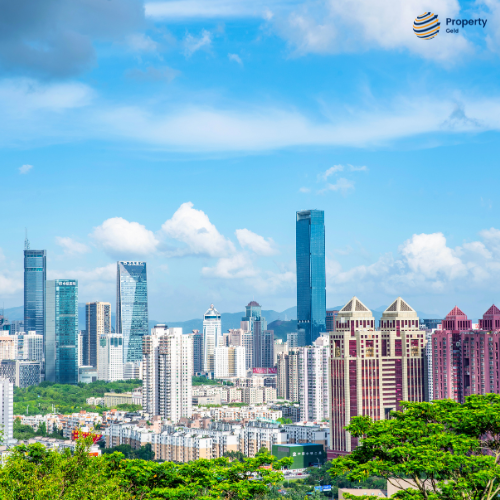
Dubai’s real estate sector continues to experience robust growth, with significant price appreciation, rental increases, and investor confidence driving momentum into 2025. According to Deloitte’s annual Real Estate Predictions report, Dubai saw a 19% rise in rental rates and a 20% increase in property sales prices in 2024.
A combination of population growth (5%), record-high residential transactions, and strong economic expansion has reinforced Dubai’s reputation as a secure investment hub. Villas continue to outperform apartments in terms of price appreciation, while Dubai’s hospitality, office, retail, and industrial sectors remain key drivers of economic growth.
Dubai Real Estate Market Trends & Outlook
1. Residential Real Estate Growth & Investment Potential
Dubai’s residential property market witnessed substantial price appreciation in 2024, with average sales prices increasing by 20% to AED 1,597 ($435) per sq. ft.. Sales transaction volumes reached record highs, with 44% of transactions occurring in the secondary market.
Key Residential Market Highlights:
- Demand for townhouses and villas remains strong, especially for affordable, family-friendly communities.
- Rental yields surged to 6.7%, with Dubailand, Meydan, and International City recording the highest rental growth (39%-46% YoY increase).
- Cash buyers and current residents dominate the villa and townhouse market, reinforcing demand for mid-segment and luxury properties.
While new supply may stabilize price growth in the second half of 2025, Dubai’s long-term property investment outlook remains positive.
2. Hospitality & Tourism: A Key Economic Driver
Dubai’s hospitality sector continues to thrive, with the city attracting 18.7 million overnight visitors in 2024, reflecting a 9% YoY increase. The average hotel occupancy rate climbed to 78%, solidifying Dubai’s position as a global tourism leader.
Key Hospitality Sector Highlights:
- Revenue Per Available Room (RevPAR) increased by 1% due to rising demand for luxury and business travel.
- Dubai’s international tourism campaigns and new hospitality brands have strengthened its global presence.
- The city’s reputation as a high-end travel destination continues to attract foreign investment in hospitality and tourism-related real estate.
Dubai’s sustained tourism growth is expected to further boost the hospitality and short-term rental markets in 2025.
3. Office Market: Rising Demand for Prime Spaces
Despite global economic fluctuations, Dubai’s office real estate sector has remained resilient. The annual rental increase of 17% indicates strong corporate demand, particularly from multinational firms and financial institutions seeking prime office locations.
Key Office Market Insights:
- Premium office towers, such as ICD Brookfield (DIFC), maintained 95%+ occupancy in 2024.
- Grade A office rents increased by 12% as corporate expansions and relocations continued.
- Pro-business policies and economic growth have fueled the demand for commercial real estate, even amid competition from Abu Dhabi and Riyadh.
Dubai’s corporate real estate market is expected to remain highly competitive in 2025, supported by business-friendly regulations and economic diversification.
4. Retail Real Estate: Strong Consumer Spending & Expansion Plans
The retail sector is expected to experience a 6% rise in total sales between 2025 and 2027, driven by growing consumer demand, population growth, and tourism expansion.
Key Retail Market Trends:
- Retail real estate is evolving, with businesses adopting hybrid digital and in-store sales models.
- The Dubai Urban Master Plan 2040 emphasizes community-based retail expansion, improving accessibility and convenience.
- Sustainability and technology-driven innovations are reshaping neighborhood retail experiences.
Dubai’s strategic retail initiatives are making way for new commercial developments, enhancing investment opportunities in the retail real estate sector.
5. Industrial & Logistics: Rising Demand from E-commerce & Manufacturing
Dubai’s industrial real estate market has experienced rapid expansion, driven by the e-commerce, logistics, and manufacturing sectors.
Key Industrial Market Trends:
- JAFZA, Dubai South, and DIP recorded the highest warehouse rental rates.
- JAFZA saw a 28% annual rise in warehouse rents, reflecting high demand for logistics and distribution hubs.
- The UAE’s import and export trade grew by 8.4% and 6.6% respectively, reinforcing Dubai’s role as a global trade and logistics hub.
Dubai’s industrial sector is expected to remain strong in 2025, with continued growth in e-commerce and supply chain operations.
Dubai Real Estate Market Forecast for 2025
Dubai’s real estate sector is poised for long-term expansion, supported by government initiatives, infrastructure development, and rising foreign direct investment.
Key Predictions for 2025:
Residential, commercial, and hospitality markets will continue to grow, though price stabilization is expected in some segments due to increased supply.
Sustainable urban planning and smart city initiatives will enhance Dubai’s appeal to investors and residents.
Government-backed projects and transport infrastructure developments will drive further growth in the real estate and construction sectors.
As Dubai moves closer to its 2040 Urban Master Plan, the city remains an attractive destination for property investors, with high-yielding residential and commercial opportunities in a globally competitive market.